
Behind Meridian
Why I Built Meridian: The Quit-Smoking App I Couldn’t Find
After failed quit attempts and apps that felt wrong, I built Meridian to offer calmer support for the hardest craving moments.


I tried to quit smoking more than once before I wrote a single line of Meridian. Each time, I reached for an app to help me, and each time something about it pushed me back out. Meridian is the app I wish those moments had handed me instead.
I am not a clinician, and I do not have a research department. I am one person who smoked, wanted to stop, and kept running into tools that felt built for someone else. What follows is the honest version of how Meridian came to be: what was missing, what I read for weeks on end, and what I decided to build in its place.
The Apps Never Quite Fit Me
Every quit-smoking app I downloaded seemed to treat quitting like a game. There was a streak counter that reset to zero the moment I slipped, so one cigarette could erase weeks of effort in a single tap. There were badges, confetti, and notifications that either cheered me on or quietly scolded me. For some people, that works. For me it felt loud in exactly the wrong way.
Quitting does not happen in a stadium. It happens in a car outside work, in the ten minutes after a hard phone call, late at night when no one is watching. A scoreboard has nothing useful to say in those moments. It just raises the stakes on a decision that is already hard enough.
Quitting smoking is not a game to win. It’s a health decision, repeated in ordinary, stressful, and private moments.
So the first thing I decided, before any feature, was what Meridian would refuse to be. No streak that punishes. No leaderboard. No turning a health decision into a performance. That was not a marketing angle. It was the whole reason I started building the app.
What a Craving Actually Is
The turning point came from reading, not coding. I spent weeks going through cessation guidance and craving research, and one idea reorganized how I thought about the entire problem: a craving is not a permanent state. Urges tend to rise, peak, and pass, usually within a few minutes.1
That single fact changed how I judged the apps I had tried. If the hard part is a few specific minutes, then an app that only logs cigarettes after the fact is arriving too late. A weekly summary can’t help you at 11pm.
Research on just-in-time mobile cessation support describes the same opportunity: a phone can, in principle, offer help during a high-risk moment. The evidence available in that review was still limited, so I treated it as a design direction, not proof that an app can make someone quit.5
A Line to Steer By
I named the app Meridian because a meridian is a line. Sailors used lines of longitude to know where they were and to hold a course across open water. I wanted the app to be that kind of thing: not a coach yelling from the sidelines, but a steady reference you can orient yourself against when the day gets rough.
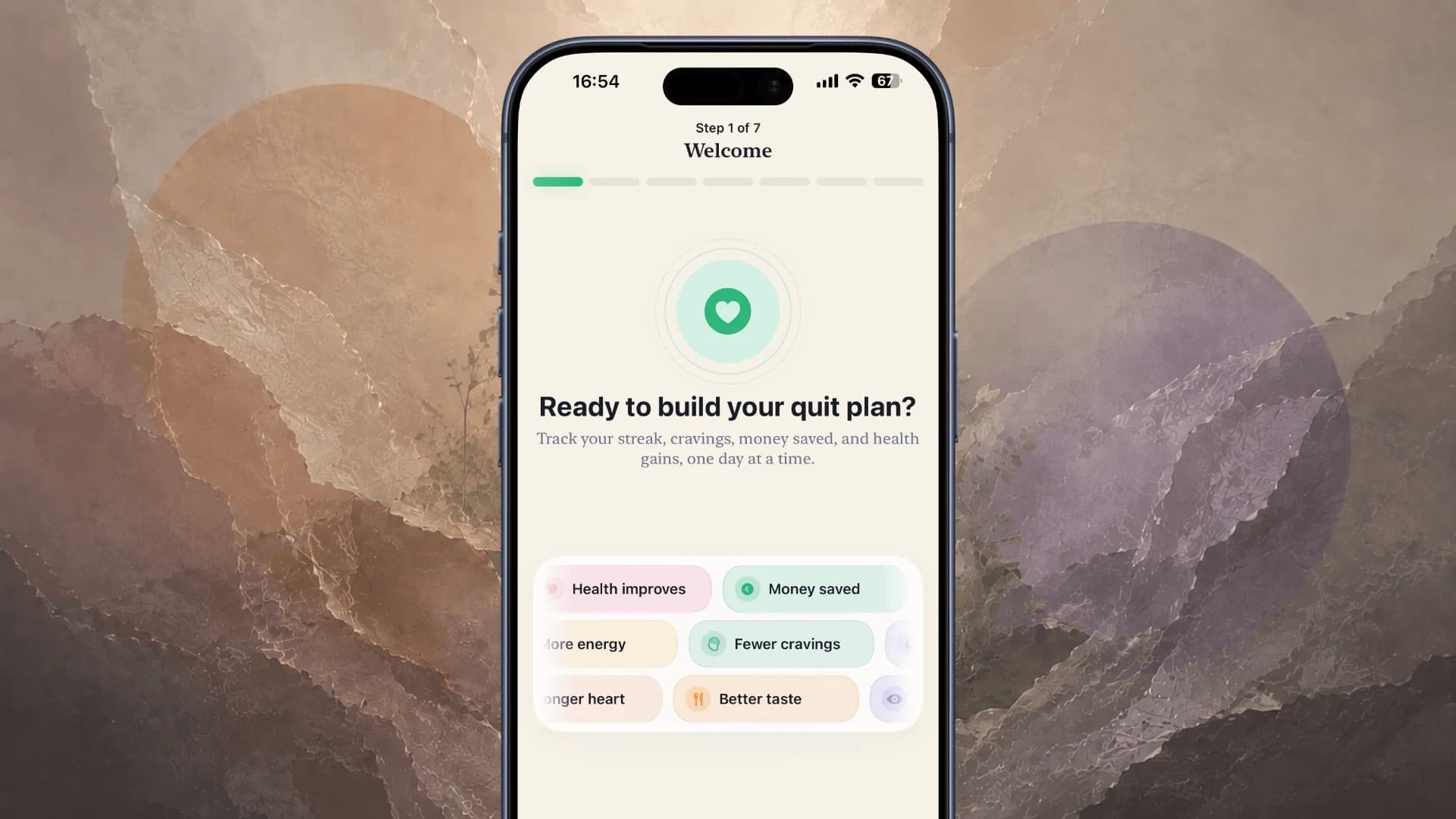
That gave me the sentence I built everything around. Quit with a plan, not pressure. Before day one, Meridian asks for a few concrete things and turns them into a plan you can actually see, so the decision is not resting on willpower alone.2
- 1Choose when to quitStart today or choose a future quit date. Meridian begins tracking your journey from that moment.
- 2Describe your smokingAdd how many cigarettes you smoke and what they cost. Meridian turns those numbers into clear, personal progress.
- 3Save your reasonWrite why you want to quit. Meridian keeps it close for cravings and moments when your decision feels harder.
- 4Prepare for cravingsChoose tools you can use when an urge appears, including guided breathing and quick craving support.
- 5Check in with yourselfRecord cravings, triggers, mood, and difficult moments. Meridian helps you notice patterns without judging them.
None of this is dramatic. That is the point. A calm setup makes the rest of the app calm, and it means that when a craving arrives, the groundwork is already done.
Built for the Moment Before You Smoke
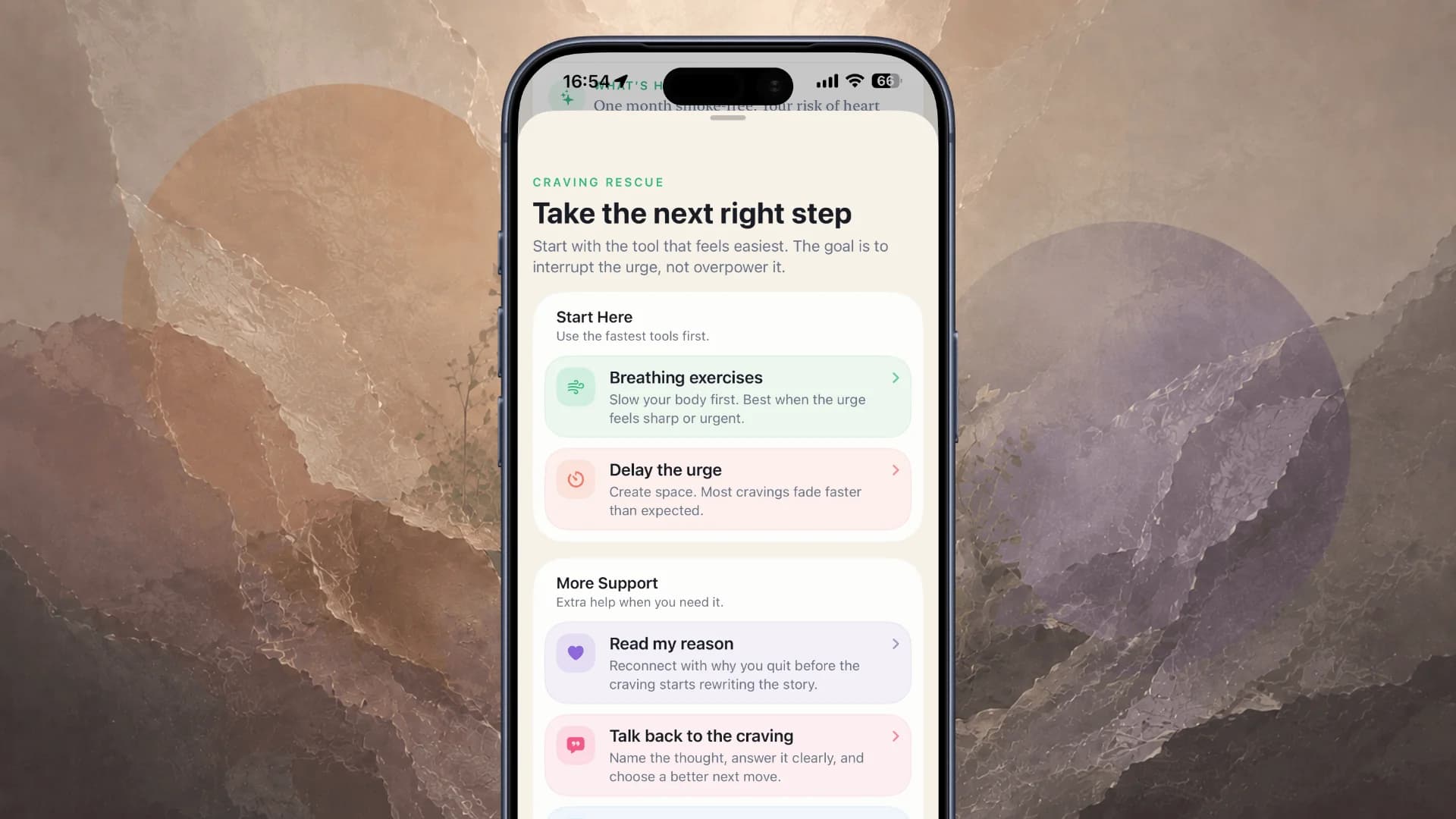
Craving Rescue is the heart of Meridian, and it is the part I am proudest of. When an urge hits, you open the app and it offers a set of tools for the next few minutes rather than a lecture. There are five: guided breathing, a delay timer, read my reason, talk back to the craving, and a quick reset.
5
rescue tools
Five fast ways to respond when a craving hits, so you do not have to figure everything out in the moment.
4
breathing patterns
Four guided breathing rhythms, so you can choose one that feels manageable in the moment.
1
clear goal
The aim is not to win the whole day at once. It is to get through the next few minutes without smoking.
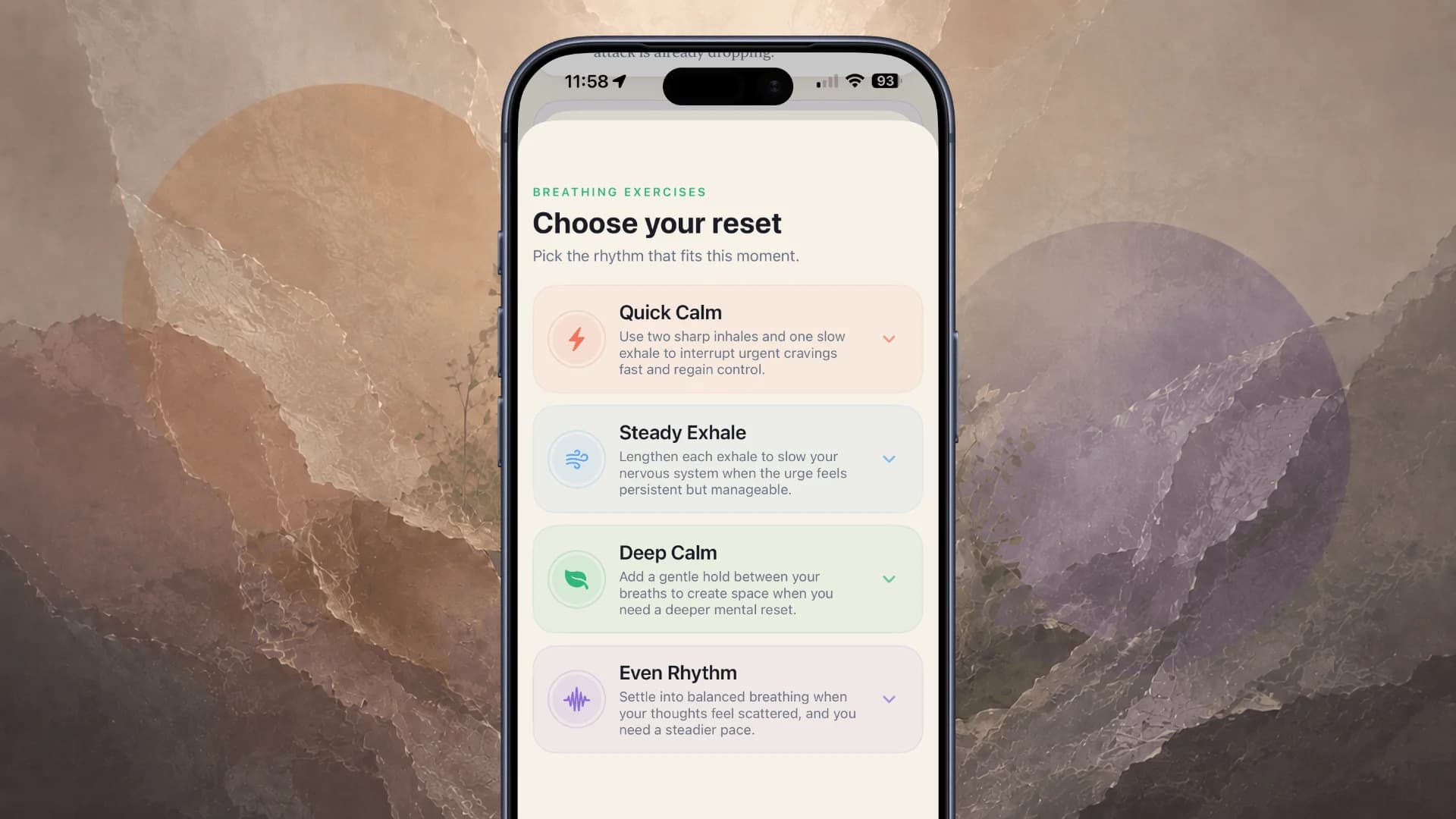
The breathing tool has four patterns because one rhythm may feel easier to follow than another in a difficult moment. Quick Calm uses two short inhales and one long exhale. Steady Exhale follows a slower pace. Deep Calm uses the 4-7-8 sequence. Even Rhythm uses a balanced pace. These names describe how Meridian presents the exercises, not a claim that a particular pattern treats a specific symptom.
The most important design decision sits at the end of a rescue, not the start. After you finish a tool, Meridian asks a simple question: what changed? The urge eased, you need another step, you might smoke soon. It is a checkpoint, not a verdict. Nothing in it assumes you failed. And if you do smoke, you can log it, and even that is treated as information about a trigger rather than a mark against you.
Inside a rescue
One urge, three smaller decisions
Craving Rescue breaks an overwhelming moment into three simple actions you can actually follow.
Notice
Name what set it off
Identify the trigger instead of treating the craving like a command you have to obey.
Pause
Reach for one small tool
Use breathing, a delay timer, or another quick support to interrupt the automatic reach before it happens.
CONTINUE
Reconnect and move forward
Read your reason, notice what has changed, and focus on getting through this moment rather than judging how well you handled it.
A Slip Is Not a Failure
This is the design choice I feel most strongly about, because it is the one that failed me in other apps. Most of them punish a slip by zeroing your streak, which quietly tells you that the weeks before it no longer count.
Meridian handles it differently. It tracks your current smoke-free stretch, and yes, a logged cigarette restarts that stretch. But it does not erase the larger journey: the money you have saved, the milestones you have reached, or the patterns you have learned about yourself. The stretch is one number among many, not a verdict on the whole effort.
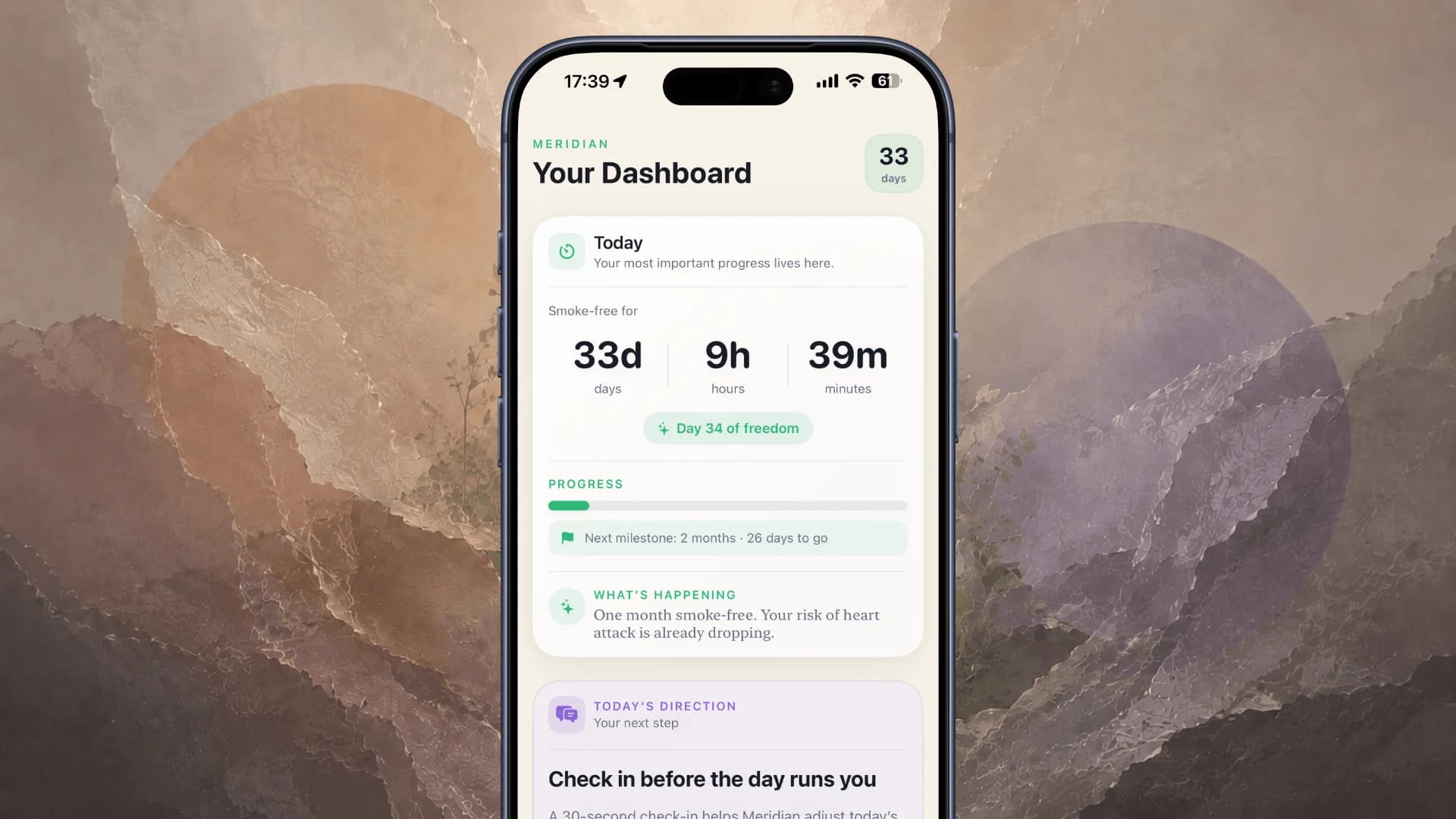
A cigarette can restart a stretch. It does not erase the work.
Public-health guidance is clear that a slip does not need to become a verdict. Smokefree.gov describes it as a temporary setback and recommends returning to the quit attempt, reviewing what caused it, and planning differently next time.2
An all-or-nothing design can push someone away at the exact moment they need a reason to stay. I wanted the opposite: a tool that treats a lapse as a place to learn, not a place to quit quitting.
Progress You Can See, Not a Score
Refusing to gamify does not mean hiding progress. It means showing real things instead of invented ones. Meridian tracks smoke-free time, cigarettes avoided, and money saved, and it lays out a path of eighteen health milestones from twenty minutes to a full year. The timings follow population-level public-health guidance, where changes begin within minutes and continue over years. They are a general guide, not a personal medical forecast.67
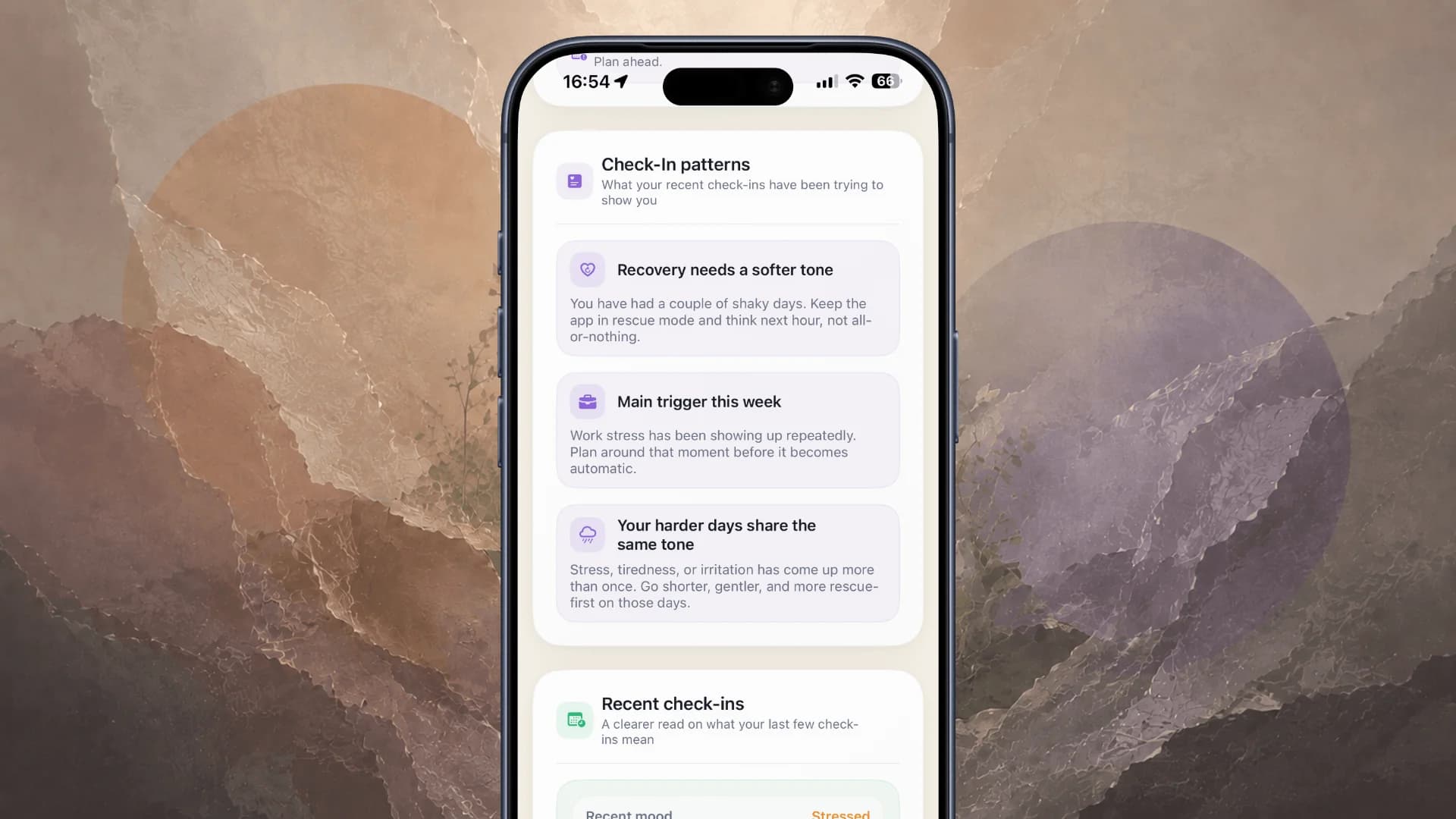
The rest of the progress side works the same way. Home Screen widgets keep your smoke-free time visible without opening the app. Siri and Shortcuts let you log a craving or check your progress by voice. A Daily Quest offers one small action rather than a checklist of demands. Quiet daily check-ins help the app tailor its guidance to your real patterns. None of it is a leaderboard, and none of it asks you to perform.
What I Left Out
Some of the decisions I am happiest with are things Meridian does not do. There is no streak built to punish you. There are no ads. I do not sell your data, and I never planned to. Your progress backs up to your own iCloud, you can export or delete it whenever you want, and you control which categories sync. On a lock screen, reminders can stay discreet, because a notification about quitting smoking is nobody else’s business.
I left every one of these things out on purpose. Each of them would have made the app a little louder and the person using it a little smaller. Building solo meant I never had to argue with anyone about that.
Where Meridian Is Now
I started building in the winter of 2025 and released version 1.0 in May 2026, on my own. Since then, it has kept growing. There is a gentler onboarding flow now, Home Screen widgets, Siri shortcuts, and more breathing patterns than it launched with. But the center has not moved: a calm plan, real help in the hard minute, and progress you never have to earn back.
Meridian is free to download and complete onboarding, where you can set up your personal quit plan. Access to the app after onboarding requires Meridian Pro, available as a monthly plan, an annual plan, or a one-time lifetime purchase.
Meridian cannot quit for you, and it cannot make every craving easy. It is not a replacement for counselling, medication, quitlines, or clinical care; those supports can improve the chance of quitting successfully.3 What Meridian can do is meet you in the difficult moments, help you slow things down, and make the next decision feel a little more manageable. If any of that sounds like the thing you have been looking for and not finding, that makes two of us.
FAQ
Is Meridian a medical treatment for quitting smoking?
No. Meridian is a planning and craving-support tool that helps you get through hard moments and see your progress. Medical questions and emergencies belong with a qualified professional.
Does it still help if I have already slipped?
Meridian is designed to remain usable after a slip. A logged cigarette restarts your current smoke-free stretch without erasing your milestones, money saved, or what you have learned. This is a product-design choice, not a guarantee of quitting success.
Do I have to be at my quit date to use it?
No. You can build a plan and prepare your rescue tools before day one, which is often the difference between a smooth start and a rough one.
Does Meridian show ads or sell my data?
No. There is no advertising and no data selling. Your progress backs up to your own iCloud, and you can export or delete it at any time.
How much does Meridian cost?
Meridian is free to download and complete onboarding, including setting up your quit plan. Continued access requires a monthly plan, an annual plan, or a one-time lifetime purchase. The exact price is shown before purchase and may vary by country or App Store region.
Sources
Research links- 1NHS: Understand Your Smoking Triggers and CravingsUsed for cravings lasting only a few minutes, common triggers, routines, stress, coffee, and practical distraction advice.
- 2Smokefree.gov: Build My Quit PlanUsed for quit planning, choosing reasons, identifying triggers, saving motivation, and treating setbacks as part of the process.
- 3CDC: How to Quit SmokingUsed for counseling, quitlines, medication, combination support, and the point that people often need more than willpower.
- 4PubMed: Brief Structured Respiration Practices Enhance Mood and Reduce Physiological ArousalUsed for the findings and limits of the randomized study of daily five-minute cyclic sighing in healthy adults.
- 5PubMed: Delivering Just-in-Time Smoking Cessation Support via Mobile PhonesUsed for the potential and evidence limits of delivering mobile support during high-risk smoking moments.
- 6NHS: What Could Happen When You Quit SmokingUsed for general health changes beginning within minutes and continuing through the first year.
- 7CDC: Benefits of Quitting SmokingUsed for population-level health changes that continue over months and years after quitting.